
Watering Your Cannabis: How to Fix Overwatering and Underwatering
Table of Contents
Too much or too little water can hinder cannabis growth and cause several health problems for the plant. This guide explains how to identify the symptoms of both overwatering and underwatering, including yellowing leaves, drooping, and reduced development. Learn how to correct these issues and get practical tips to avoid them in the future. With professional guidance on proper watering techniques, you’ll help your cannabis plants flourish.
Watering your cannabis plants might seem like the easiest part of the growing process—just pour some water into the soil and you’re good to go, right? Not exactly. While it may appear straightforward, watering is actually one of the most misunderstood and crucial elements of successful cannabis cultivation. Getting it wrong, whether by giving your plants too much or too little water, can lead to a host of problems that not only stunt growth but also compromise the health and yield of your plants.
Overwatering is a common mistake, especially for new growers who want to ensure their plants have enough to drink. However, cannabis roots need both water and oxygen to function properly. When soil remains too wet for too long, the roots can’t access the oxygen they need, leading to symptoms like drooping, yellowing leaves, slow growth, and even root rot. On the flip side, underwatering can be just as damaging. Without sufficient moisture, the plant struggles to take up nutrients, resulting in dry, brittle leaves, wilting, and stunted development.
If you’ve ever found yourself staring at your cannabis plants wondering why they look sad leaves curling, turning yellow, or the whole plant drooping—it’s highly likely that improper watering is to blame. It’s a delicate balance, and finding that sweet spot between too much and too little water is key to maintaining a thriving grow.
Understanding your plant’s needs, observing signs of distress early, and learning proper watering techniques can make a world of difference. By recognizing the specific symptoms of both overwatering and underwatering and knowing how to respond appropriately, you’ll be better equipped to keep your cannabis healthy and vigorous throughout its life cycle.
In the sections that follow, we’ll explore the telltale signs of watering issues, how to fix them when they arise, and most importantly, how to prevent them in the first place. With the right knowledge and a bit of attention, you can master this essential aspect of cannabis cultivation and set your grow up for success.
Pure Seed Genetics – Cannabis Seeds
-
Northern Lights
Price range: $39.00 through $180.00 -

Blue Haze
Price range: $39.00 through $180.00 -
CBD Blueberry
Price range: $39.00 through $180.00 -
Zkittlez Feminized
Price range: $39.00 through $180.00
Understanding the Cannabis Plant’s Water Needs
Cannabis is a vigorous, fast-growing plant with a high demand for water and nutrients throughout its life cycle. However, this doesn’t mean it should be watered constantly or without consideration. One of the most common mistakes new growers make is assuming that because cannabis grows quickly, it must need a lot of water all the time. In reality, cannabis has specific watering requirements that change depending on its growth stage, environment, and the medium it’s grown in. Understanding these needs is essential for maintaining healthy, resilient plants and achieving optimal yields.
The Role of Water in Cannabis Growth
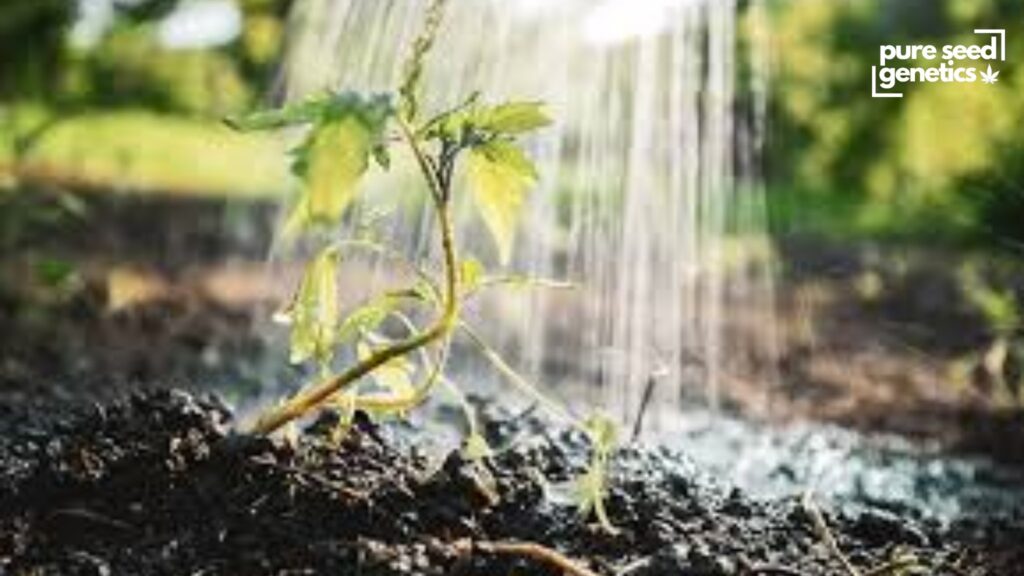
Water plays several crucial roles in a cannabis plant’s development. It’s a primary medium for transporting nutrients from the soil to the plant’s cells. Water also aids in photosynthesis, helps regulate temperature through transpiration, and keeps plant tissues hydrated and flexible. Without adequate moisture, these biological processes slow down or stop, leading to visible signs of stress like drooping leaves, discoloration, and slow growth.
That said, more water does not automatically mean better growth. The roots of cannabis plants also require oxygen to function properly. When the soil is too wet for too long, oxygen gets pushed out, creating anaerobic conditions that can suffocate the roots and promote harmful pathogens like root rot. On the other hand, letting the plant dry out too much can cause it to go into survival mode, limiting nutrient uptake and stunting development.
Factors That Influence Watering Needs
Several variables influence how much and how often you should water your cannabis plants:
- Growth Stage: Young seedlings and clones have small root systems and require less water than larger, more mature plants. As the plant grows, its water consumption increases, especially during the vegetative and flowering stages.
- Growing Medium: Different soils and substrates retain moisture differently. Coco coir dries out more quickly than traditional soil, while hydroponic systems require entirely different water management strategies.
- Pot Size and Type: Smaller pots dry out faster than larger ones, and fabric pots allow more airflow and quicker evaporation than plastic pots.
- Environmental Conditions: Temperature, humidity, and airflow greatly affect how quickly water evaporates. Hot, dry environments increase the rate at which soil dries out, while cool, humid conditions slow it down.
- Light Intensity: Stronger lights cause plants to transpire more, increasing their need for water.
Signs of Proper Hydration
A well-watered cannabis plant will look vibrant and perky, with firm, upright leaves and a consistent rate of growth. The soil should feel moist but not soggy, and the pot should have good drainage. When you lift the pot, it should feel light when dry and noticeably heavier after watering. Getting familiar with this weight difference is a helpful trick for gauging when it’s time to water.
Avoiding the Guesswork
To truly understand your cannabis plant’s water needs, it’s essential to monitor the moisture level in the root zone regularly. Tools like soil moisture meters, the finger test (sticking your finger into the top inch or two of soil), or simply observing plant behavior can help you avoid over- or underwatering. Developing a watering schedule based on observation and experience rather than rigid routines will lead to better outcomes.
While cannabis plants are thirsty and fast-growing, they don’t benefit from constant watering. In fact, overwatering is one of the leading causes of poor plant health and yield loss. By learning to recognize your plants’ water needs at each stage of growth and adapting your practices to suit their environment and medium, you’ll provide the ideal conditions for a strong, productive crop.
Overwatering vs. Underwatering – What’s the Difference?
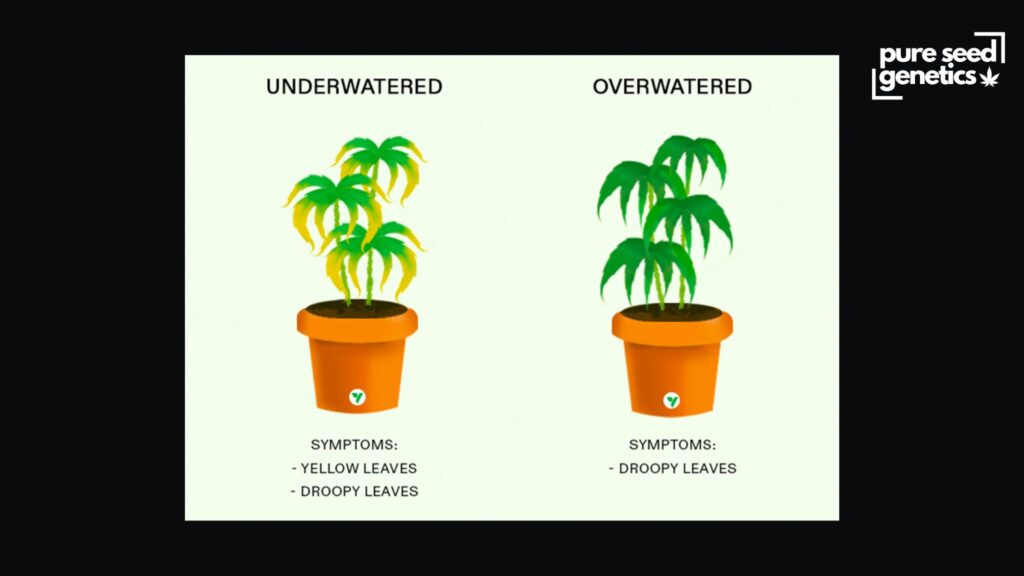
At first glance, overwatering and underwatering can appear to cause the same symptoms: drooping or wilted leaves, a generally sad-looking plant, and slowed growth. However, despite the visual similarities, these two problems are fundamentally different in nature and require completely opposite solutions. Misdiagnosing one for the other can actually make the situation worse, so it’s crucial for growers to learn how to distinguish between the two and respond appropriately.
Similar Symptoms, Different Causes
When a cannabis plant wilts, it’s a sign that something is preventing it from maintaining turgor pressure, the internal water pressure that keeps the plant rigid and upright. In the case of underwatering, this happens because the plant doesn’t have enough water available in the root zone to support its physiological processes. The roots are essentially “thirsty,” and the plant can’t draw in enough moisture to stay hydrated. As a result, the leaves droop and may feel dry or brittle. The soil will usually feel dry to the touch, and the pot will be noticeably lightweight.
On the other hand, overwatering creates a different type of stress. When the soil is constantly saturated, the roots are deprived of oxygen, which is just as critical to their function as water. Without oxygen, root cells begin to die off, and the plant can no longer absorb nutrients or water effectively even though there may be plenty of moisture present in the soil. The result is also drooping or curling leaves, but in this case, the leaves often feel soft and limp rather than dry. The soil may appear wet or soggy, and the pot will feel heavy.
Why Getting It Wrong Makes It Worse
Here’s the catch: the symptoms can look so similar that many growers instinctively apply the wrong fix. If a plant is wilting due to overwatering, giving it more water will only compound the problem, potentially leading to root rot and further stress. Conversely, if a plant is wilting because it’s underwater and a grower mistakes it for overwatering, they may delay watering, causing the plant to become even more dehydrated and stressed.
This misdiagnosis is especially common among newer growers who are still learning to “read” their plants. It’s one of the reasons why understanding the context such as the recent watering schedule, the weight of the pot, the soil texture, and environmental conditions is so important when determining the root cause of wilting.
How to Tell the Difference
Fortunately, there are several clues that can help you tell whether you’re dealing with an overwatered or underwatered plant:
- Leaf Texture: Overwatered plants tend to have soft, limp leaves, while under watered leaves are dry, crisp, or papery.
- Soil Moisture: Check the top few inches of soil. If it’s dry, your plant is likely underwatered. If it’s wet or soggy, overwatering is the likely culprit.
- Pot Weight: Lift the pot if it feels light, it’s probably time to water. If it feels heavy, hold off.
- Leaf Color: Overwatering can cause yellowing due to nutrient lockout or root rot. Underwatering might cause leaves to look dull and faded, with possible browning around the edges.
- Root Health (if visible): In extreme cases, checking the roots can provide a clear answer. Healthy roots are white and firm; overwatered roots may be brown, slimy, or smell rotten.
Treating Each Issue
To fix underwatering, the solution is straightforward: water your plant thoroughly, ensuring the water reaches all parts of the root zone. Once rehydrated, the plant should perk up within a few hours. From there, adjust your watering schedule so that the soil stays evenly moist, not bone dry.
Fixing overwatering is more complex. First, stop watering and let the soil dry out naturally. Improve drainage by using well-aerated soil and pots with proper drainage holes. In severe cases, it might be necessary to transplant the plant into fresh soil and trim away damaged roots. Going forward, water only when the top inch or two of soil feels dry, and always ensure excess water can drain away easily.
Prevention is Key
Ultimately, the best way to avoid both overwatering and underwatering is by developing a consistent watering routine based on observation, not a fixed schedule. Use your senses touch, sight, and weight to judge when your plants truly need water. Combine that with an understanding of your growing environment and plant stage, and you’ll greatly reduce the risk of either issue occurring.
In conclusion, while overwatering and underwatering might produce similar symptoms, they are very different problems with opposite solutions. Knowing how to tell them apart and respond correctly is an essential skill for any cannabis grower aiming to maintain healthy, high-yielding plants.
Symptoms of Overwatering in Cannabis Plants
Overwatering is one of the most common issues faced by cannabis growers, particularly those new to cultivation. While it’s natural to want to ensure your plants have enough water, consistently giving them too much can lead to serious problems. When the roots are constantly sitting in saturated soil, they become deprived of oxygen, leading to poor nutrient absorption, root rot, and even plant death if not corrected. Below are some clear signs that your cannabis plant may be suffering from overwatering:
Droopy Leaves (Even When the Soil Is Wet)
One of the most noticeable symptoms of overwatering is wilting or drooping leaves, even though the soil is still moist or saturated. This confuses many growers, as droopy leaves are also a symptom of underwatering. The key difference here is the soil condition. If your plant looks limp but the soil feels wet to the touch, it’s likely getting too much water. These leaves often feel soft and may curl downwards like claws.
Yellowing Leaves, Especially Lower Ones
When roots can’t function properly due to excess moisture, the plant struggles to absorb nutrients. This nutrient deficiency often shows up as yellowing, particularly in the lower leaves first. Over time, the yellowing may spread upwards if the issue continues, and leaves may begin to fall off. This is especially common in nitrogen-deficient conditions brought on by root stress.
Fungus Gnats Flying Around
Fungus gnats thrive in moist environments and are often a secondary indicator of overwatering. These tiny black flies hover near the soil surface and lay their eggs in damp soil. The larvae can feed on the plant’s roots, compounding the problem by stressing the root system further. If you’re seeing small gnats in your grow area, it’s a strong sign your soil is staying too wet for too long.
Musty or Sour Smell from the Soil
Healthy soil should have a clean, earthy smell. If your pot smells musty, sour, or like mildew, this is a red flag for poor aeration and excessive moisture. These odors often signal the beginning of root rot, a condition where the plant’s roots start to decompose due to a lack of oxygen and the presence of harmful microbes.
Additional Signs to Watch For:
- Slowed growth or stalled development
- Dark green or shiny leaves (a sign of stress)
- Algae or mold growing on the soil surface
- Root discoloration (if visible or during transplanting)
What To Do If You Suspect Overwatering:
- Stop watering immediately and let the soil dry out before watering again.
- Improve drainage by using pots with proper holes and a well-aerated soil mix.
- Increase airflow around the base of the plant to help moisture evaporate faster.
Use fans and dehumidifiers if your grow area is too humid.
Consider transplanting into fresh soil if root rot is suspected.
Understanding these symptoms and responding early can help you correct the issue before lasting damage occurs. With careful attention to watering habits and environmental conditions, you can restore your plant’s health and keep your cannabis thriving.
Symptoms of Under Watering in Cannabis Plants
While it’s essential not to overwater your cannabis plants, it’s equally important not to underwater them. Cannabis is a thirsty plant, especially during its vegetative and flowering stages, and it relies on consistent moisture to carry nutrients through its system, support photosynthesis, and maintain healthy cell function. When a plant doesn’t receive enough water, it quickly begins to show signs of stress. If left unchecked, underwatering can lead to serious developmental issues or even plant death. Below are the key symptoms to watch for:
Dry, Crispy Leaves
One of the most obvious signs of underwatering is the appearance of dry, brittle leaves. The edges may become brown and crispy, and the leaves can lose their healthy green color, taking on a dull or faded appearance. In severe cases, entire leaves may dry out and fall off. This is the plant’s way of conserving what little moisture it has by sacrificing less essential parts.
Soil Pulling Away from the Edges of the Pot
When soil becomes extremely dry, it begins to contract and shrink, often pulling away from the sides of the pot. This not only indicates a lack of moisture but also makes it harder for the soil to reabsorb water when you do try to rehydrate it. Water may run straight through the gaps without soaking into the root zone, leading to persistent dryness.
Leaves Curling Upward
Unlike the downward droop associated with overwatering, underwater cannabis plants often exhibit upward-curling or cupping leaves. This is a stress response as the plant attempts to reduce surface area and slow down water loss through transpiration. You may also notice the leaves feel stiff or papery when touched.
Slowed or Halted Growth
Water is critical for nutrient uptake and cellular function. Without it, the plant cannot carry out essential metabolic processes. As a result, you may notice that your plant’s growth has slowed dramatically or stopped altogether. New leaves and shoots may stop forming, and the plant may seem “frozen” in place.
Additional Signs to Look For:
- Wilting during the hottest part of the day, with partial recovery at night
- Very light pot weight (plants in fabric pots make this especially easy to feel)
Pale or discolored leaves that may turn yellow or brown from the tips inward - Roots that appear dry and fragile during transplant or inspection
What To Do If You Suspect Underwatering:
- Water thoroughly until you see runoff from the bottom of the pot. Ensure the soil absorbs the water evenly.
- Check pot weight regularly to get a feel for when your plants need water.
- Use mulch or cover crops to help retain moisture in soil (especially in outdoor grows).
Adjust your watering frequency based on temperature, humidity, and plant size. Larger plants and warmer environments require more frequent watering.
While underwatering is usually easier to fix than overwatering, consistent neglect can still cause lasting stress to your cannabis plants. The good news is that most under watered plants bounce back quickly once they’re rehydrated. By observing your plants daily and paying attention to the signs, you can develop a balanced watering routine that keeps them healthy, vigorous, and on track for a strong harvest.
The Science Behind Water Uptake in Cannabis
Understanding how cannabis plants take in and use water is essential for growing healthy, high-yielding crops. Water isn’t just something plants need to survive, it’s a critical component of nearly every biological function in a cannabis plant. From nutrient absorption to temperature regulation and overall growth, water plays a key role in the plant’s success. Let’s take a deeper look at the science behind water uptake in cannabis, including the vital roles of root absorption and transpiration.
Root Absorption: The Gateway to Growth
The journey of water in a cannabis plant begins in the root system. Roots are more than just anchors; they’re highly efficient systems for drawing in both water and nutrients from the surrounding soil or growing medium. Tiny root hairs located near the root tips dramatically increase the surface area available for absorption. These root hairs take in water through a process called osmosis, which allows water to move from areas of higher concentration (in the soil) to lower concentration (inside the root cells).
Along with water, roots also absorb essential nutrients dissolved in the moisture around them. These include macronutrients like nitrogen, phosphorus, and potassium, as well as important micronutrients such as calcium, magnesium, and iron. Without sufficient water, nutrient uptake is severely limited, even if the nutrients themselves are present in the soil.
However, roots don’t just need water, they also need oxygen. Healthy soil contains a balance of water and air. When a plant is overwatered, the spaces between soil particles fill up with water, pushing out oxygen. Without access to oxygen, the roots can’t “breathe,” leading to a condition known as root suffocation. If the lack of oxygen persists, beneficial microbes in the soil die off, harmful pathogens flourish, and the roots begin to rot. This is why proper drainage and allowing the soil to dry out between waterings is so important.
Transpiration: Driving Water Movement and Nutrient Uptake
Once water is absorbed by the roots, it doesn’t just sit there, it travels upward through the plant in a process known as transpiration. This is the movement of water from the roots, through the plant’s vascular system (xylem), and out through small pores on the underside of leaves called stomata.
Transpiration serves multiple important functions:
- Nutrient Transport: As water moves upward, it carries nutrients from the soil to different parts of the plant. Without transpiration, nutrient delivery is severely impaired.
- Cooling: Much like sweating in humans, transpiration helps regulate the plant’s temperature, preventing overheating, especially under intense grow lights or sunlight.
- Turgor Pressure: Transpiration helps maintain internal water pressure within the plant’s cells, keeping stems and leaves firm and upright.
Several environmental factors can influence the rate of transpiration. For example, airflow and humidity play a major role. In a well-ventilated grow space with moderate humidity, transpiration occurs at a healthy rate. But in high-humidity environments, the air becomes saturated with moisture, making it harder for water to evaporate from the leaf surface. This slows transpiration, which in turn slows nutrient uptake and can lead to issues like drooping, yellowing, or nutrient deficiencies even when the plant appears well-watered.
On the flip side, extremely low humidity or high heat can cause the plant to lose water too quickly, leading to dehydration and stress. In these conditions, the plant may close its stomata to prevent moisture loss, which unfortunately also halts the uptake of carbon dioxide needed for photosynthesis. This kind of environmental imbalance can stunt growth or cause other health problems over time.
Striking the Right Balance
The science of water uptake in cannabis highlights the importance of achieving balance. Too much water suffocates the roots, while too little disrupts nutrient transport and cell function. Similarly, environmental conditions that are too humid or too dry can throw off the plant’s ability to transpire properly.
As a grower, your job is to create conditions where water and oxygen are readily available in the root zone, and transpiration can occur at a steady, healthy rate. This involves using a well-aerated growing medium, watering only when needed, ensuring proper pot drainage, and maintaining optimal temperature and humidity levels.
Water uptake in cannabis is a finely tuned biological process that hinges on two critical components: root absorption and transpiration. Roots take in water and nutrients, while transpiration draws those nutrients upward through the plant and helps regulate its internal environment. Overwatering, underwatering, or poor environmental control can throw this system out of balance, leading to stunted growth and poor yields. By understanding the science behind water movement in your plants, you can make informed decisions that promote strong roots, efficient nutrient use, and ultimately, a more vigorous and productive cannabis grow.
Watering Best Practices
Frequency Guidelines
As a general rule:
- Seedlings: every 2-3 days
- Vegetative: every 2 days
- Flowering: every 1-2 days
But always adjust based on conditions.
Lift-the-Pot Method
Pick up the pot. If it feels light, it’s probably time to water.
Best Time to Water
Morning is ideal. It gives plants time to absorb water before nighttime when cooler temps can invite mold.
Tools to Help You Water Right
Soil Moisture Meters
Affordable and surprisingly accurate, these tell you exactly when to water.
Smart Irrigation Systems
Automated setups help keep watering consistent, especially in large grows.
pH and EC Meters
Water should be pH-balanced (6.0–6.8 for soil) to allow proper nutrient absorption.
Choosing the Right Soil for Cannabis
Well-Aerated, Draining Soil
Roots need both air and water. Choose soil mixes with:
- Perlite (for drainage)
- Coco coir (retains moisture without waterlogging)
- Vermiculite (helps with moisture retention)
Adjusting Watering for Indoor vs. Outdoor Grows
Indoor Grows
Less airflow, controlled environment. Be careful not to overwater.
Outdoor Grows
More airflow and sun exposure means more frequent watering may be needed.
Water Quality Matters
Tap Water vs. Filtered Water
Chlorine, chloramines, and hard minerals in tap water can stress roots. Filtered water is usually better.
pH Matters
Always check water pH. Nutrient lockout can happen if it’s too high or low.
Preventing Future Watering Problems
Keep a Grow Journal
Note watering dates, symptoms, environmental changes. Patterns help you troubleshoot early.
Be Observant
Spend time with your plants daily. Early signs are easier to fix than full-blown problems.
Conclusion
Mastering the art of watering cannabis is part science, part intuition. Overwatering and underwatering are two sides of the same coin, and both can ruin your harvest. But with the right knowledge, tools, and a bit of hands-on experience, you’ll learn to read your plant like a book.
So next time you reach for that watering can, ask yourself: is my plant really thirsty or am I just overzealous? Your buds will thank you.
FAQ
How often should I water cannabis plants?
It depends on the plant’s stage and environment, but generally every 1-3 days. Always check the soil before watering.
What’s the best time of day to water cannabis?
Morning is best. It allows the plant to absorb water during the day and reduces mold risk.
Can I recover a plant from root rot?
Yes, but only if caught early. Remove affected roots, repot, and improve drainage.
Do cannabis plants need more water during flowering?
Yes, especially as buds fatten up. Just avoid getting the buds wet.
How can I tell if I’m watering correctly?
Healthy leaves, good growth, and no drooping are good signs. A moisture meter can help fine-tune your approach.

Pure Seed Genetics
Cannabis seeds for sale with free shipping across the USA, Europe, and Canada. Our weed seeds are bred to meet customer and breeders standards of growing of all levels and tastes.
Copyright 2026 © Pure Seed Genetics
